Short answer
- Is it toxic? Not in normal use: the refrigerant stays inside the unit’s sealed circuit. The common refrigerants in home and car air conditioners (R32, R410A, R134a, R1234yf) are in the lower-toxicity class A under ASHRAE 34.
- Is it harmful? It can be if it escapes: a large leak in a closed, unventilated space can displace oxygen and cause suffocation, high concentrations of fluorinated refrigerants can disturb the heart rhythm, liquid refrigerant can cause frostbite on skin contact, and fluorinated refrigerants can form toxic hydrogen fluoride (HF) if they meet a flame or a hot surface.
- Is it flammable? It depends on the gas: R410A and R134a are non-flammable (A1), R32 is lower-flammability (A2L), and R290 (propane) and R600a (isobutane) are highly flammable (A3).
Is Refrigerant Gas Toxic?
Not in normal use. Refrigerant, often called “AC gas”, circulates inside the unit’s sealed circuit and is not breathed in; the risk arises when it escapes through a leak or during servicing. For what refrigerant is and how it works, see What is Air Conditioning (Refrigerant) Gas? 2026 Guide.
The toxicity of refrigerants is expressed in two classes in the ANSI/ASHRAE 34 and ISO 817 standards. Under ASHRAE 34, class A refrigerants have an exposure limit (the permissible exposure limit, PEL, or, where none is assigned, the occupational exposure limit, OEL) of 400 ppm or greater, and class B refrigerants have a limit below 400 ppm. Class A denotes lower toxicity and class B higher toxicity.
R32, R410A, R134a and R1234yf are all class A. Ammonia (R717), used in industrial refrigeration, is class B (B2L).
“Lower toxicity” does not mean “non-toxic”, though. Manufacturers’ safety data sheets (SDS) and the UNEP report point to the following main risks when refrigerant escapes.
Is AC Gas Harmful? The Main Risks
Oxygen Displacement in Closed Spaces
At high concentrations, refrigerants displace the oxygen in the air. The vapours of gases such as R32, R134a and propane are heavier than air (R32, for example, has a molar mass of 52 g/mol against about 29 g/mol for air), so they can collect in basements, pits or small, poorly ventilated rooms. Daikin’s safety data sheets for R32, R410A and R134a warn that “high concentrations cause asphyxiation”. Linde’s propane and isobutane sheets add that symptoms may include loss of mobility or consciousness and that the victim may not be aware of asphyxiation.
Heart Rhythm Disturbance at High Concentrations
Daikin’s safety data sheets for R32, R410A and R134a state that cardiac arrhythmia may occur at high levels and may prove suddenly fatal. Deliberately inhaling refrigerant is therefore extremely dangerous.
Contact with Liquid Refrigerant: Frostbite
Refrigerant is supplied in the cylinder as a liquefied gas under pressure, and part of it is liquid inside a running unit’s circuit. Escaping liquid cools sharply as it evaporates and can cause cold burns (frostbite) on contact with skin.
Flames or Hot Surfaces: Toxic Decomposition Products
Fluorinated refrigerants can decompose when they come into contact with a naked flame or a very hot surface. According to the 2022 RTOC report published by the United Nations Environment Programme (UNEP), the decomposition products include carbon oxides, carbonyl fluoride (COF₂) and hydrogen fluoride (HF); HF is a toxic and corrosive gas. The report notes that fires and brazing during servicing without first fully evacuating and flushing the circuit are the most common causes.
Is Refrigerant Flammable? Safety Classes (A1, A2L, A2, A3)
Every refrigerant has a safety class made of a letter and a number: the letter shows toxicity (A lower, B higher) and the number shows flammability. ASHRAE 34 defines three flammability classes and one subclass: class 1 is for refrigerants that do not propagate a flame, class 2 for lower-flammability refrigerants and class 3 for highly flammable refrigerants; 2L is the subclass of class 2 for refrigerants that burn very slowly.
The table below summarises the ASHRAE 34 criteria for each flammability class:
| Flammability class | Meaning | ASHRAE 34 criterion (summary) |
|---|---|---|
| 1 (A1, B1) | No flame propagation (non-flammable) | No flame propagation at 60 °C and 101.3 kPa |
| 2 (A2, B2) | Lower flammability | Flame propagation; lower flammability limit (LFL) > 0.10 kg/m³ and heat of combustion < 19,000 kJ/kg |
| 2L (A2L, B2L) | Lower flammability, burns very slowly | Class 2 criteria plus burning velocity ≤ 10 cm/s |
| 3 (A3, B3) | Higher flammability | Flame propagation; LFL ≤ 0.10 kg/m³ or heat of combustion ≥ 19,000 kJ/kg |
The table below shows the safety classes of common refrigerants, taken from the ASHRAE 34 and ISO 817 listing in the UNEP 2022 RTOC report:
| Refrigerant | Safety class | Flammability | Typical use |
|---|---|---|---|
| R410A | A1 | Non-flammable | Split and central air conditioners |
| R134a | A1 | Non-flammable | Car air conditioning, refrigeration systems |
| R407C | A1 | Non-flammable | Chillers and central air conditioners |
| R404A | A1 | Non-flammable | Commercial and low-temperature refrigeration |
| R23 and R508B | A1 | Non-flammable | Ultra-low-temperature (cascade) systems |
| R22 | A1 | Non-flammable | Older air conditioners |
| R744 (CO₂) | A1 | Non-flammable | Commercial refrigeration, heat pumps |
| R32 | A2L | Lower flammability, burns very slowly | Current split air conditioners |
| R1234yf | A2L | Lower flammability, burns very slowly | Newer car air conditioning |
| R152a | A2 | Lower flammability | Blowing agent in XPS foam production |
| R290 (propane) | A3 | Higher flammability | Commercial refrigerators, heat pumps |
| R600a (isobutane) | A3 | Higher flammability | Household refrigerators |
| R717 (ammonia) | B2L | Lower flammability, burns very slowly; higher toxicity | Industrial refrigeration |
Every unit is designed for a specific refrigerant. A gas other than the one on the unit’s nameplate should only be used where the equipment manufacturer approves it, and only by a competent service company; charging a flammable refrigerant into a system designed for a non-flammable one creates a serious safety risk.
Is R32 Flammable?
Yes, R32 is flammable, but under ASHRAE 34 it is in the lower-flammability, slow-burning (A2L) class. It needs a relatively high concentration in air to ignite: according to Daikin’s safety data sheet, its lower explosion limit is 13.8% by volume. A3 refrigerants can ignite at far lower concentrations: according to Linde’s safety data sheets, the lower explosion limit is 1.7% by volume for propane (R290) and 1.5% for isobutane (R600a).
The EU CLP classification in the manufacturers’ safety data sheets shows the same difference: Daikin’s sheet classifies R32 as a flammable gas, Category 1B (H221), while Linde’s propane and isobutane sheets classify them as extremely flammable gases, Category 1A (H220).
IEC 60335-2-40, the international safety standard for household and similar heat pumps, air conditioners and dehumidifiers, covers refrigerants of safety groups A1, A2L, A2 and A3. For technical data on R32, see our R32 gas product page.
Is Car AC Gas Toxic?
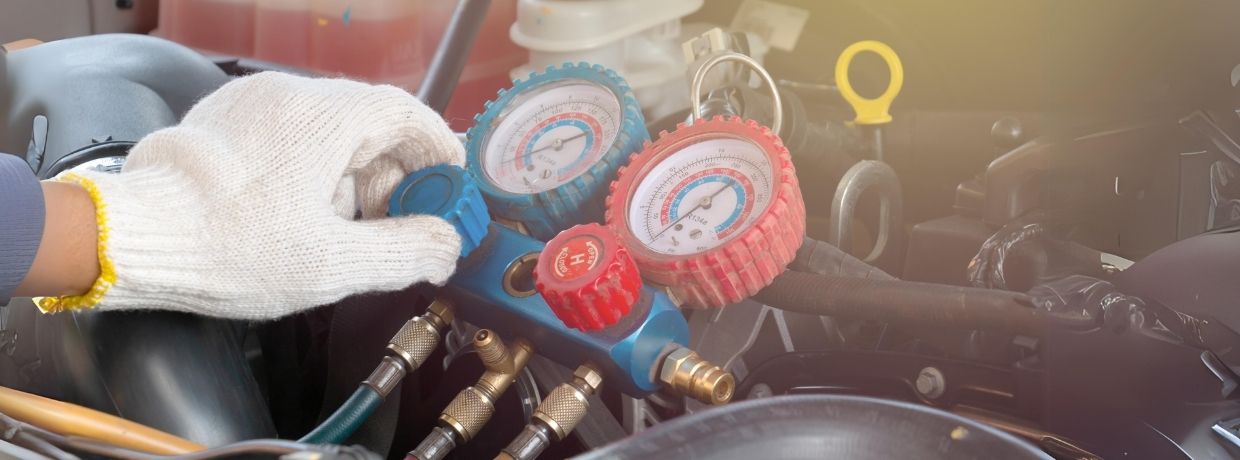
Car air conditioning has long used R134a, which is still used globally; according to the UNEP 2022 RTOC report, R1234yf is widely adopted, especially for passenger vehicles. Both are in the lower-toxicity class A.
Is car AC gas flammable? R134a is non-flammable (A1); R1234yf is in the lower-flammability, slow-burning class (A2L).
A car’s air conditioning is also a sealed circuit, and the refrigerant only escapes through a leak. When it does, the risks of oxygen displacement, heart rhythm disturbance, frostbite and HF formation on contact with a flame apply to cars as well; ventilation matters most during servicing in a closed garage. For more on car air conditioning, read Car Air Conditioning Gas Refilling: Everything You Need to Know.
Is an AC Gas Leak Dangerous? What to Do
A leak becomes dangerous as the concentration of refrigerant in the air rises; the greatest risk is in closed, unventilated spaces. If you suspect a leak:
- Get to fresh air and ventilate: If the leak is large or in a closed space, do not go in. If you can do so safely, open windows and doors.
- If you feel unwell, get medical help: Move to fresh air and call 112 (the emergency number across the EU and in Turkey) or your local emergency number.
- Keep ignition sources away from flammable refrigerants: With units that use R32, R1234yf, R290 or R600a, keep naked flames, cigarettes and sparks away from the leak.
- Do not touch liquid refrigerant: Do not touch the leak point or frosted pipes and valves with bare hands. If liquid refrigerant reaches your skin, get medical help and follow the first-aid instructions in the gas’s safety data sheet.
- Do not repair the unit yourself: Do not try to fix the leak or recharge the gas; have the unit checked by a competent service company. For stationary air conditioners containing fluorinated refrigerants, this work must be done by certified personnel in the EU and in Turkey (in the EU, servicing vehicle air conditioning requires at least a training attestation).
These steps are general information; in a dangerous situation, call 112 (or your local emergency number) and follow the safety data sheet of the gas concerned.
In the EU, Regulation (EU) 2024/573 prohibits the intentional release of fluorinated greenhouse gases into the atmosphere where it is not technically necessary for the intended use (Article 4). It also requires natural persons who install, service, repair or decommission equipment such as stationary refrigeration, air-conditioning and heat-pump equipment, carry out leak checks, or recover gas from such equipment to be certified (Articles 4(7) and 10); servicing vehicle air conditioning requires at least a training attestation. In Turkey, the Regulation on Fluorinated Greenhouse Gases of 15 October 2024 requires the person who installs or services stationary refrigeration and air-conditioning equipment containing these gases to hold a professional competence certificate (Mesleki Yeterlilik Belgesi, Article 16), requires companies doing this work for third parties to hold a service competence certificate issued by TSE (Hizmet Yeterlilik Belgesi, Article 17), and prohibits releasing these gases into the atmosphere (Article 6). To see the steps a professional service follows when refilling, read What is Air Conditioning (Refrigerant) Gas? 2026 Guide.
Frequently Asked Questions
Is it harmful to breathe in AC gas?
Common AC refrigerants are in the lower-toxicity class, but breathing them in at high concentrations is dangerous: there is a risk of oxygen deficiency and, with fluorinated refrigerants, of heart rhythm disturbance. If you notice a leak in a closed space, get to fresh air.
What are the symptoms of refrigerant exposure?
According to Linde’s propane and isobutane safety data sheets, high concentrations can cause loss of mobility or consciousness through oxygen deficiency, and the victim may not be aware of it. Daikin’s sheets for R32, R410A and R134a add that cardiac arrhythmia may occur. In that situation, call 112 (or your local emergency number); do not enter a closed space filled with gas without protection.
Is R32 refrigerant harmful?
In normal use, R32 stays inside the unit’s sealed circuit and is in the lower-toxicity class A. Like other fluorinated refrigerants, a large leak carries a risk of suffocation and, at high concentrations, of heart rhythm disturbance, and HF can form if it meets a flame. It is also lower-flammability (A2L).
Is refrigerator gas toxic?
R600a (isobutane), widely used in new household refrigerators, is in the lower-toxicity class but is highly flammable (safety class A3). Only a competent service technician should work on a refrigerator’s cooling circuit.
Is R134a flammable?
No. R134a is a non-flammable A1 refrigerant. The only hazard statement in Daikin’s safety data sheet is H280: it contains gas under pressure and may explode if heated.
Is R410A flammable?
No. Although R410A is a blend that is half R32 by mass, it is classified A1 and, according to Daikin’s safety data sheet, is not flammable.
Does AC gas have a smell? Is the smell harmful?
Smell cannot be used as an indicator of danger. According to Daikin’s safety data sheets, R32 is odourless, R410A has an ether-like odour and R134a a slightly sweetish one. Linde’s propane (R290) and isobutane (R600a) sheets also state that the odour threshold is inadequate to warn of overexposure. The absence of a smell therefore does not mean you are safe.
Is AC gas harmful to the environment?
Fluorinated refrigerants act as greenhouse gases when released into the atmosphere; the size of the effect differs from gas to gas, and our product pages list each gas’s global warming potential (GWP). This is why releasing fluorinated gases into the atmosphere is prohibited in Turkey, where disposing of equipment without recovering the gas is also banned, and in the EU wherever the release is not technically necessary for the intended use.
Sources
- ASHRAE and UNEP OzonAction, Update on New Refrigerants Designations and Safety Classifications (April 2026; refers to ANSI/ASHRAE 34-2024)
- ANSI/ASHRAE 34, Addendum d (2010): toxicity classes and Addendum g (2018): flammability classes, Table 6.1.3 (class names follow the April 2026 ASHRAE/UNEP factsheet for ANSI/ASHRAE 34-2024; criteria values are from Addendum g)
- ISO 817:2024, Refrigerants: Designation and safety classification
- IEC 60335-2-40:2024, safety standard for heat pumps, air conditioners and dehumidifiers
- UNEP, 2022 RTOC Assessment Report, Chapter 3 (Annex I, 3.4.4) and Chapter 9
- Daikin safety data sheets: R32, R410A, R134a
- Linde safety data sheets: Propane (R290), Isobutane (R600a)
- Regulation (EU) 2024/573 on fluorinated greenhouse gases
- Turkey’s Regulation on Fluorinated Greenhouse Gases (Florlu Sera Gazlarına İlişkin Yönetmelik), Official Gazette, 15.10.2024, No. 32693
- Commission Regulation (EU) 2019/521, definition of CLP flammable gas categories 1A and 1B
This article is for general information and is not medical, legal or engineering advice. The safety data sheets cited belong to those manufacturers’ products; follow the safety data sheet of the product you actually use, the unit’s manual and the regulations in force.
You can find the technical data of our refrigerants on our products page, and contact us with any questions.